What the machine asks, and what it never says
Talebrix asks a short list of questions, one at a time, for the parts every story needs: who it is about, where it happens, what kind of story, who comes along and what happens. Each question is on the 7-inch colour touch panel beside three small paintings. A child can touch a painting or press the red button and say anything at all. When the questions run out, the story is written. The machine does not chat, has no name of its own and never says “I”.
Last checked 5 November 2026 by Tom McDonough, Co-Founder and CTO
Talebrix is not on sale yet, and production is targeted for June 2027. This page describes the design, and it will change if the design does.
The questions, in order
The questions are written before the machine leaves us, and they are asked in the same order every time. A question the idea has already answered can be passed over, so a child who began with “a fox in the snow” is not asked who the story is about.
There is no fixed count written here, because the list can change between versions. What does not change is that it is short and it ends.
- Who is the story about?
- Where does it happen?
- What kind of story is it?
- Who comes along?
- What happens?
Every kind of screen
These are the machine's own screens, drawn by its software, with a written example book as the cover. Not every screen is here, but every kind of one is. None of them scrolls.
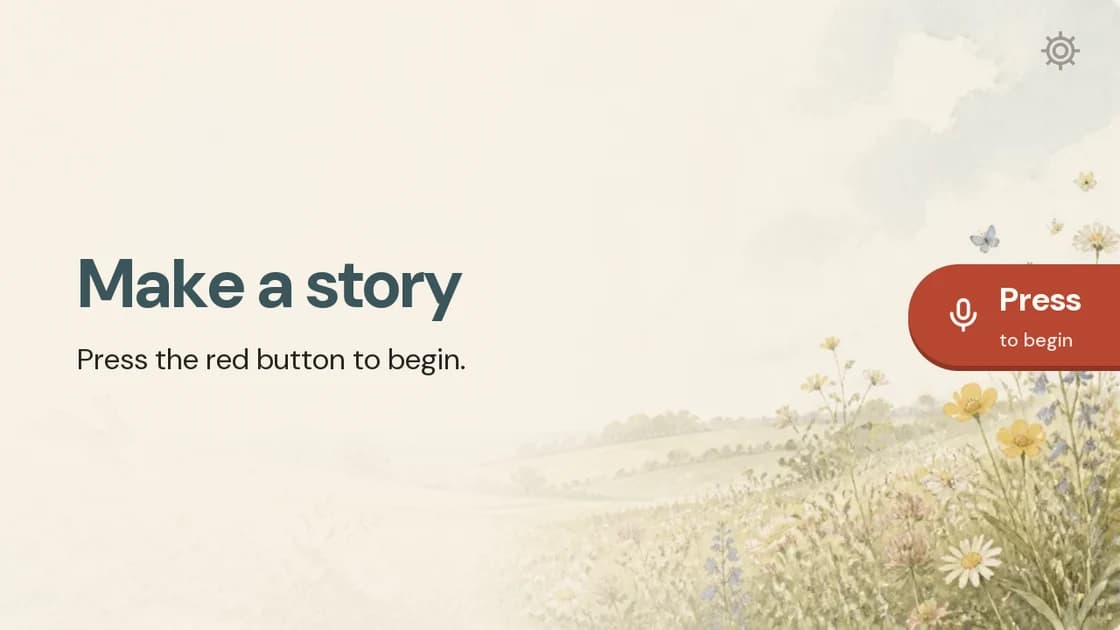
Waiting. “Make a story. Press the red button to begin.” 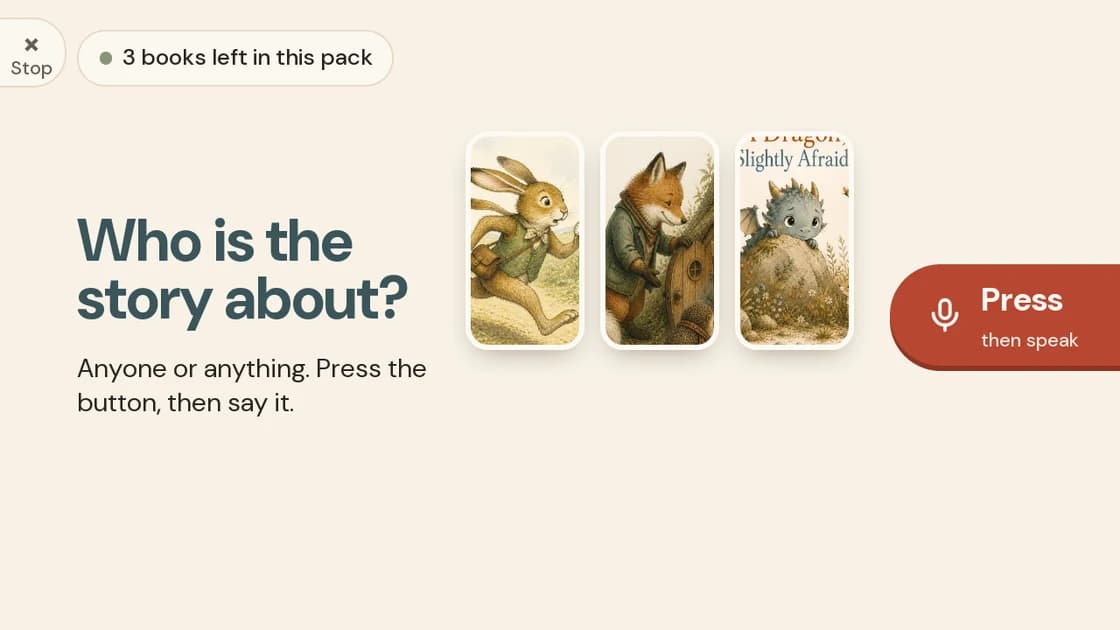
The first question. “Who is the story about?” 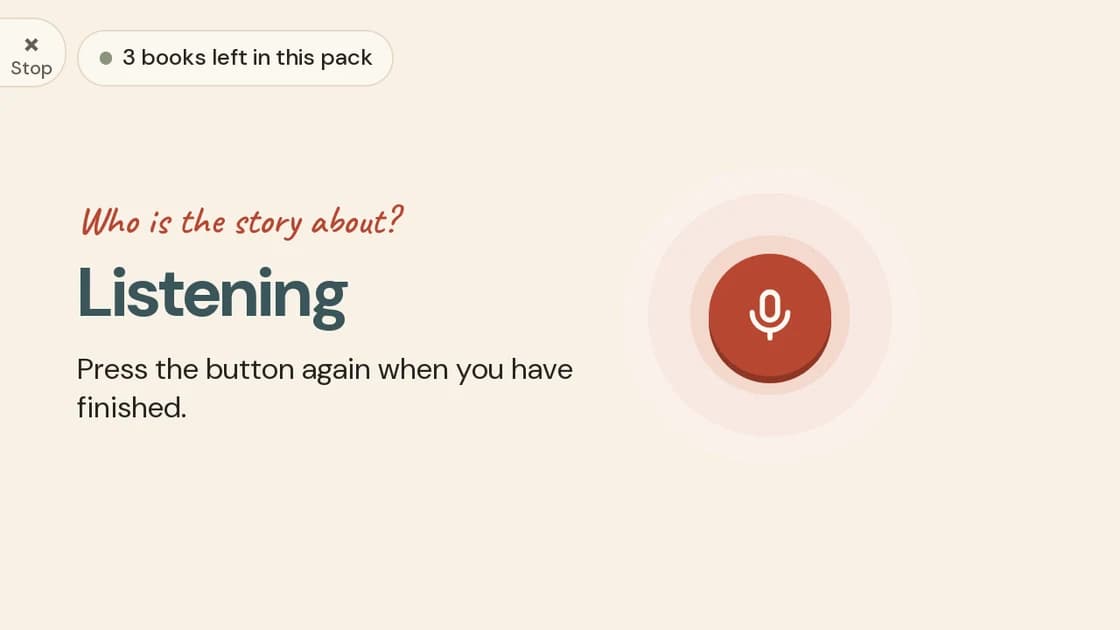
While somebody speaks. “Listening” 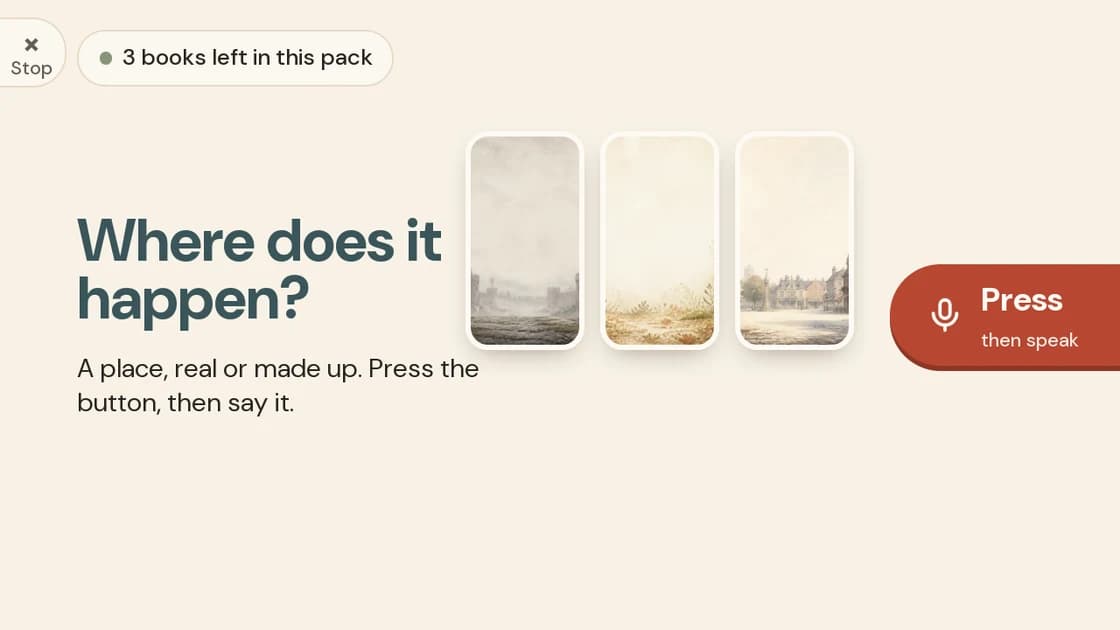
The next question. “Where does it happen?” 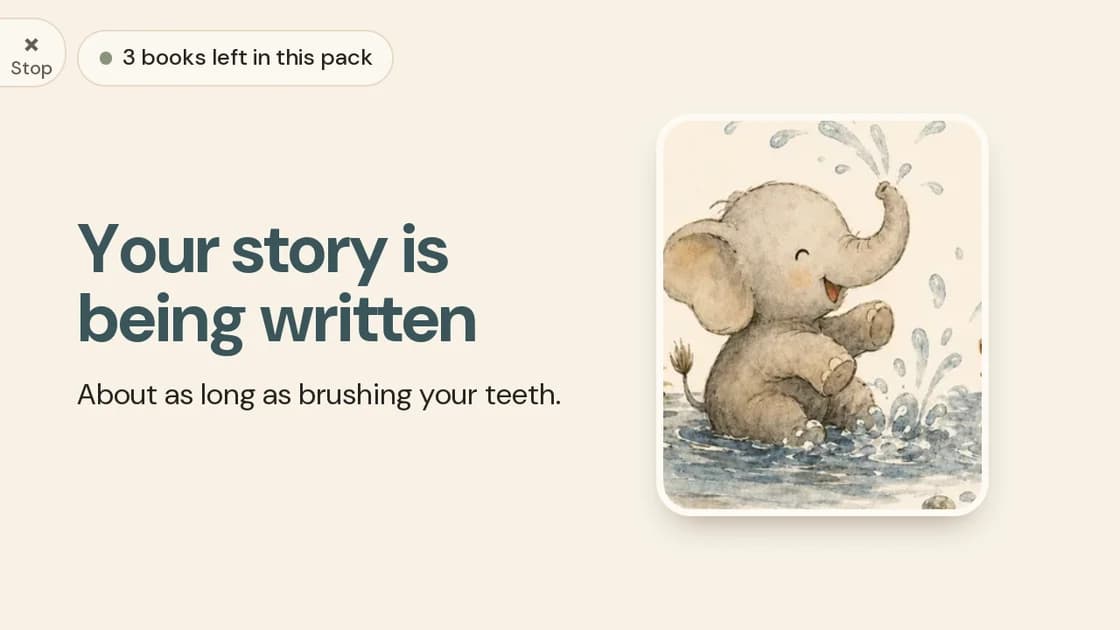
The wait. “Your story is being written. About as long as brushing your teeth.” 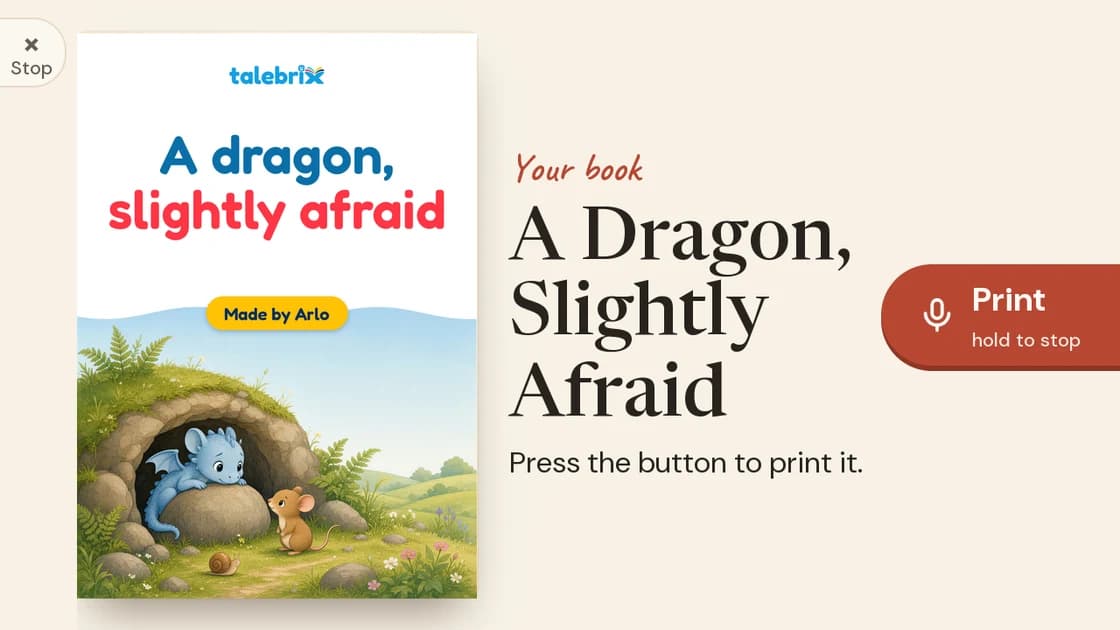
The cover. “Press the button to print it.” 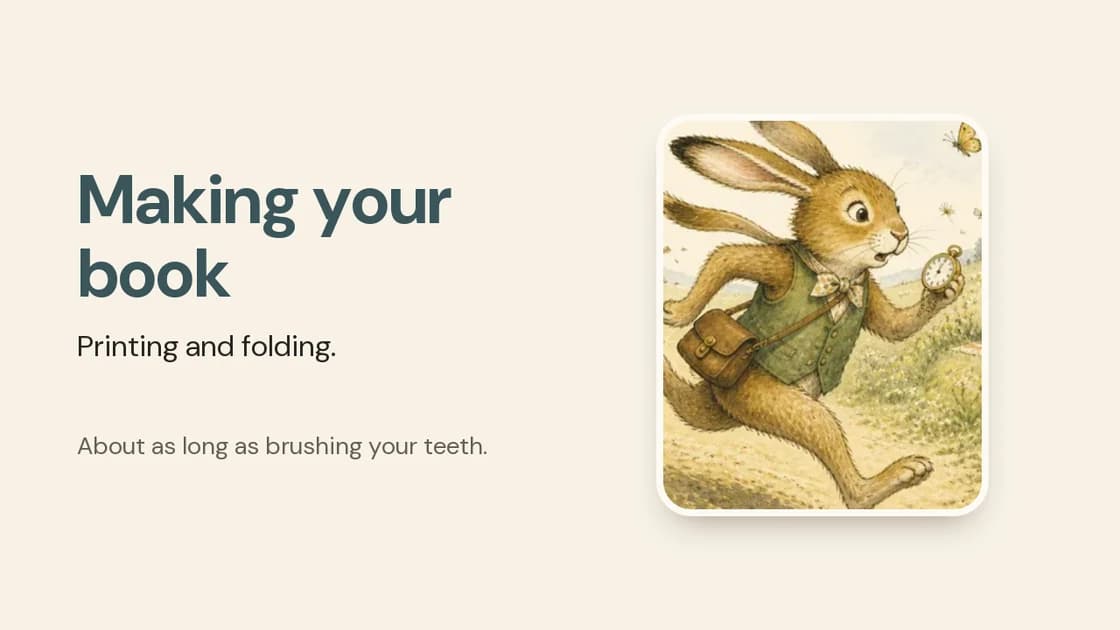
The printing. “Making your book.” 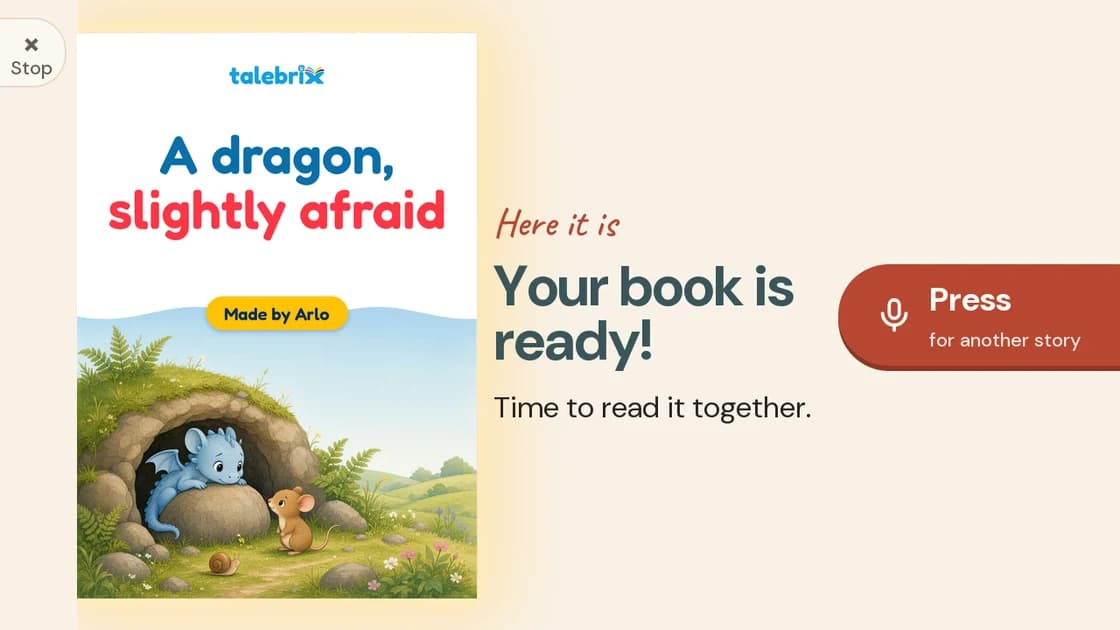
The end. “Time to read it together.”
How a child answers
- Touch a painting
- Each question comes with three small paintings. Touching one is an answer, which suits a child who would rather point than talk.
- Say something else
- Press the red button, say it, press again. Anyone or anything, the screen says, and it means it. The paintings are a start, not a list to choose from.
- Say nothing much
- A short answer is fine, and so is a shrug. Whatever is left out is filled in when the story is written.
What it never says
It speaks to ask its questions, in one fixed voice. A finished book can also be read aloud on a press of the button, word for word as printed.
- It never says the idea back, or comments on it.
- It never asks a question it was not shipped with.
- It never says “I”, and it has no name or character to be friends with.
- It never asks for anything about the child: no name, no age, no birthday. A grown-up sets those up.
- It never keeps the conversation going. After the last question it writes the book.
Questions families ask
- Is my child really writing the book, or is Talebrix?
- The machine does the writing and the drawing, and it has no story of its own to start from — so the book is made of what your child said and nothing that existed beforehand. What it is about, who is in it, where it happens, what goes wrong, how it ends, what it is called: they decide as much of that as they want to, and a four year old often says “a dragon one” and stops, in which case it writes the rest. What it will not do is write over something they did decide. That is the honest division of labour, and we would rather say it here than have you find it out afterwards.
- Do I have to make the story with my child?
- Talebrix is designed primarily for children aged 3–8 to lead the story, with a parent nearby to help. Younger children can take part with a parent leading the activity. A parent handles setup and loading.
- Is Talebrix a screen, then?
- It has a 7-inch colour touch panel for choosing between story options. There is no scrolling feed. The finished story is read as a printed book.
How this page is kept true
Every number on this page is read from the same facts the rest of the site uses, so when a fact changes the page changes with it. The date at the top changes only when a person has read the page against the product.
- First published.