From an idea to a printed book
There is no clever part being hidden here. A child says what they want a story about, Talebrix asks them a handful of questions, and then it writes it, draws it, prints it and binds it in the room. That is the experience we are developing; complete-cycle timings are still to be validated. This is the page that names what is doing the writing.
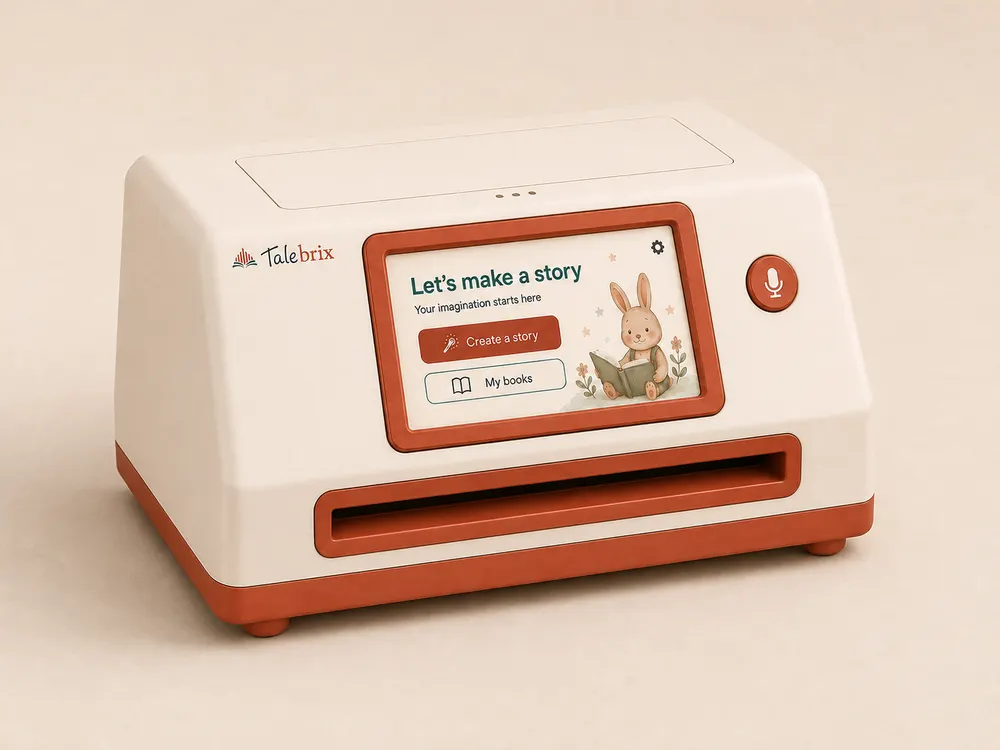
It sits in their bedroom
about the size of a shoebox, on a shelf or a chest of drawers. One button to talk to it, and a slot the book comes out of.
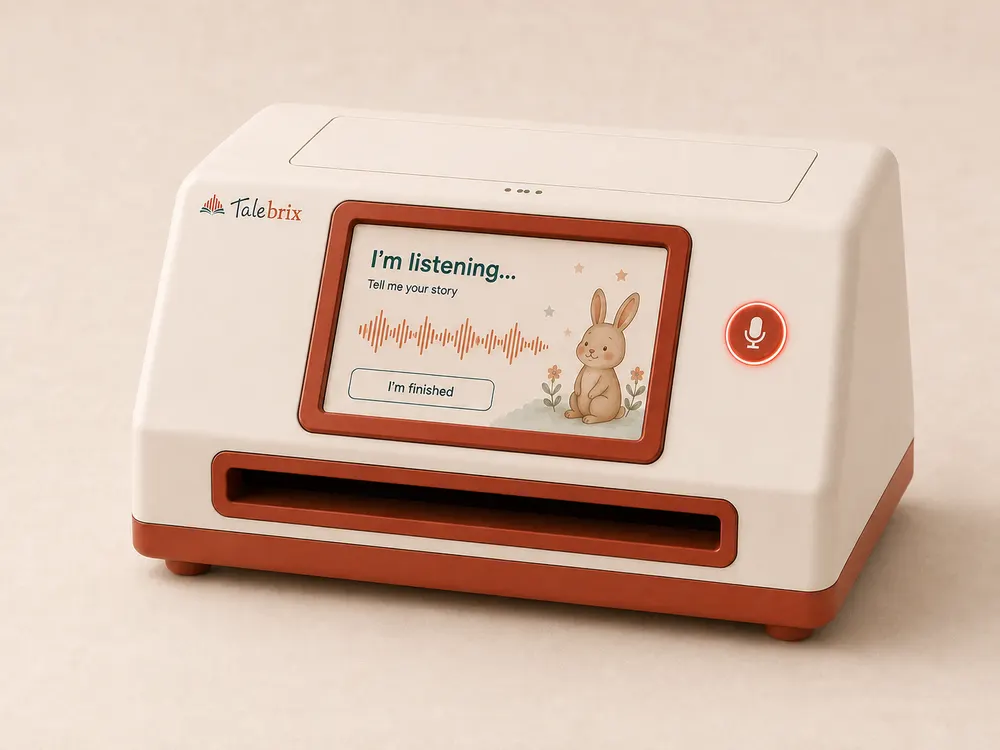
They say what they want a story about
Press the button and your child says what they want. It can be as loose as “a dragon one”.
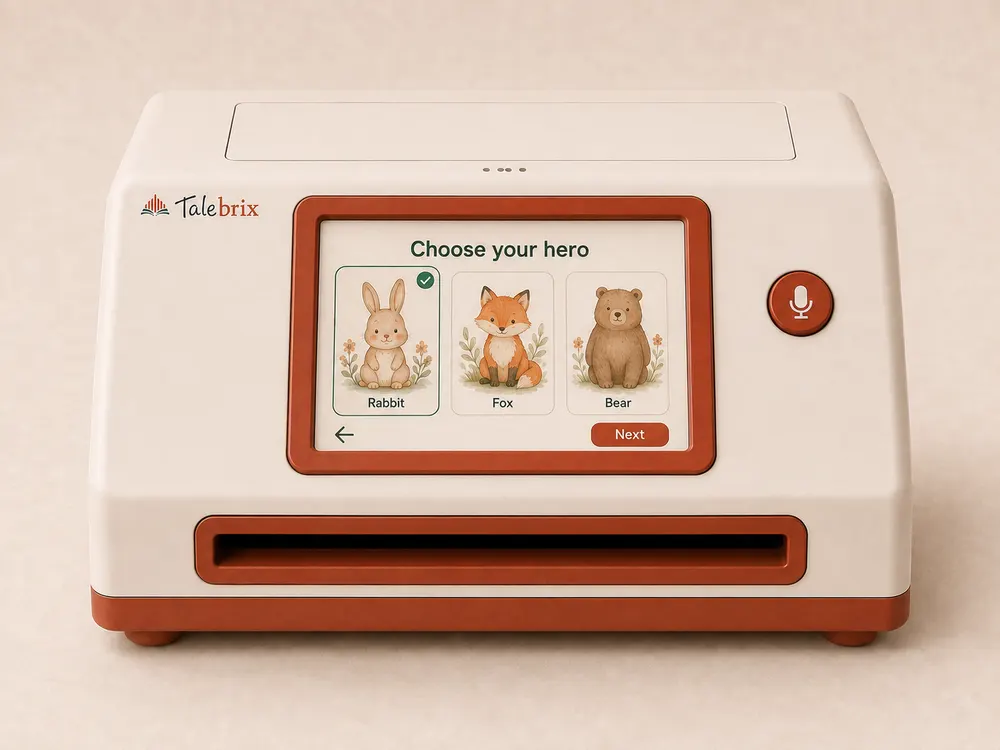
It asks who it is about
Then a handful of questions — who it is about, where it happens, what goes wrong, how it ends. Each answer is theirs, and whatever they leave is filled in.
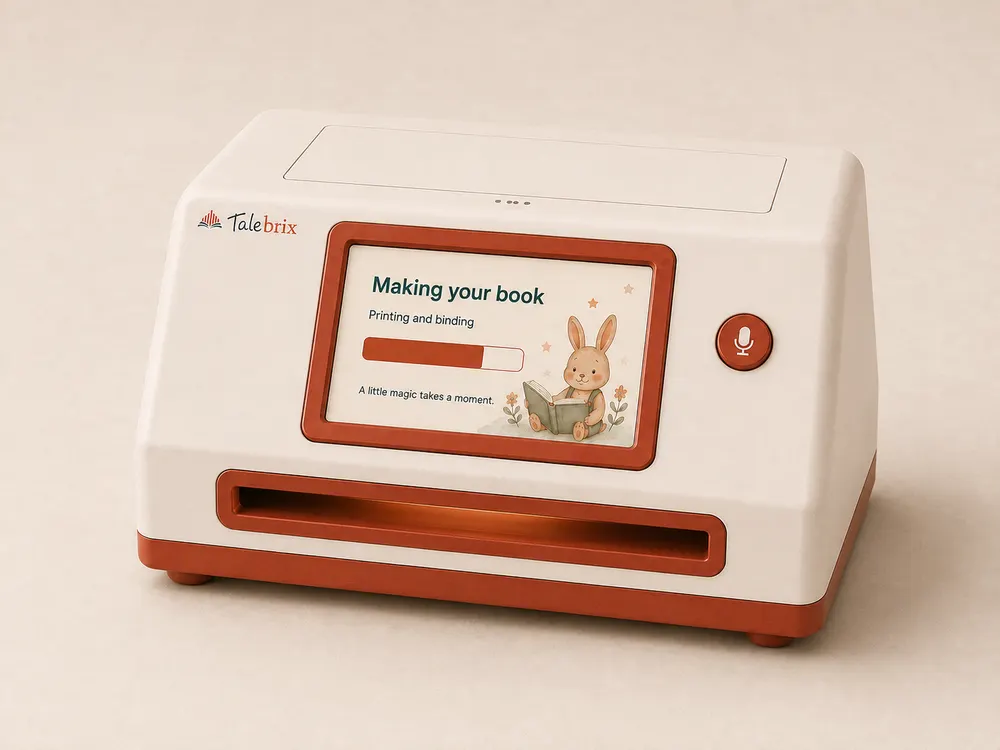
It prints it and binds it
Onto 250gsm card, folded and sealed along the spine. The complete mechanism and durability remain to be validated.
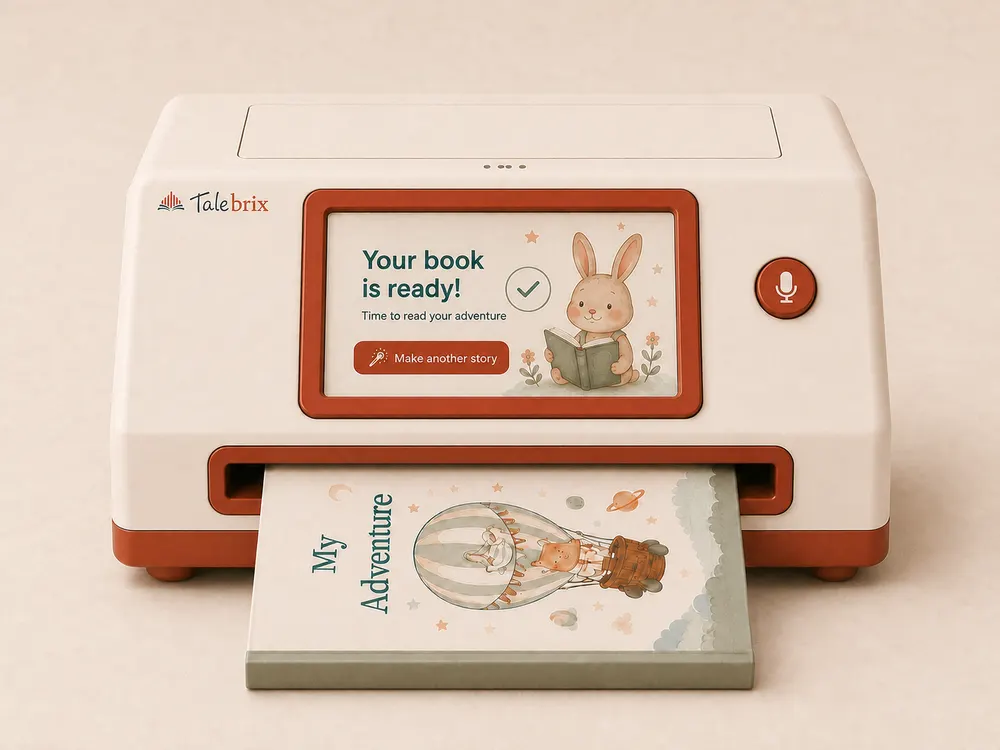
The book comes out of the front
148 × 210 mm portrait, 26 pages, the Story World’s colour down the spine. The touchscreen offers story choices; the finished story is read on paper.
A handful of questions, not a conversation
The exchange has a shape and a finish, because the point is a book rather than a thing that keeps talking. The display is the only screen involved, and it is never the thing anybody reads from.
What is doing the writing
The planned system uses cloud services for speech recognition, story writing and illustration. Speech is sent over an encrypted connection. Audio deletion and no provider training on children’s speech or story content are requirements to verify before launch.
There is no library of stories inside Talebrix and no set of templates with a gap for a name. What gets sent is your child’s answers and the ages Talebrix has been set to; what comes back is a finished book — the words, the pictures and the cover. It then prints and binds it.
So the division of labour is this, and we would rather write it down than let you discover it. The model does the writing and the drawing, and it fills in whatever your child does not say. What it will not do is write over what they did say — who is in it, where it happens, what goes wrong, what it is called. The more of that they give it, the more of the book is theirs.
How the reading level gets chosen
You tell Talebrix once who lives in the house and how old they are, and it writes to fit. The same idea comes out as two quite different books for a four year old and an eight year old — shorter sentences and more repetition at the young end, richer vocabulary and a real turn at the older end.
That is a setting on Talebrix, not an account, and nothing about it is asked for by this website or stored on it.
Story Packs
A Story Pack supplies material for 4 books. A parent loads it through the top hatch. The characters and setting come from the child’s ideas, not a fixed cast on the pack. Ink pricing and final contents are to be confirmed.
The target price for material for 4 books is £15, which works out at £3.75 in pack material per book. Talebrix arrives with 4 books in the box, and you buy another pack when you want to make more books, or you do not. There is no subscription and no recurring charge of any kind.
The specifications, such as they are
It runs off an external 24 V supply and stays plugged in, the way a kettle does. There is no battery to run down in the middle of a story, and nothing to remember to charge.
Every figure is design intent rather than a measurement taken off a finished unit. They are set out on the specifications page, along with the consequence of the section above: Talebrix needs wi-fi, because the writing and the drawing happen on our servers rather than inside the machine in your child's bedroom.
Be first to hear when Talebrix is ready
Leave an email and we will write to you twice: once now, to say you are on the list, and once when they are ready.
Join the launch list